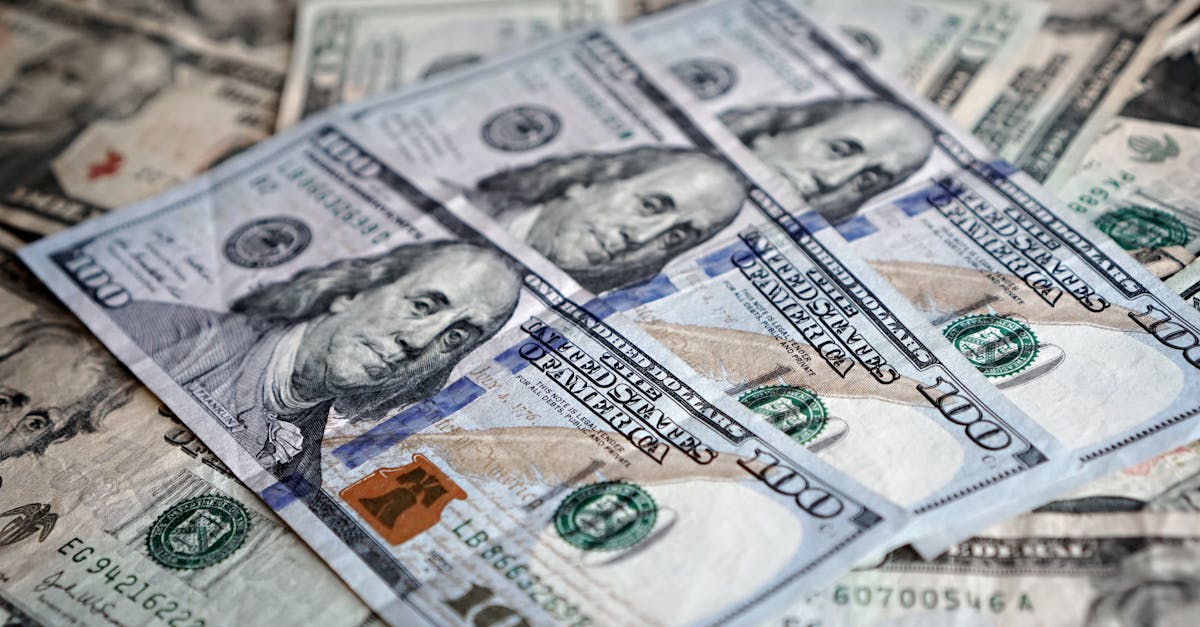
Ecuador adopted the United States dollar as its legal tender in 2000 following a severe banking and currency crisis. That pivotal decision removed exchange rate swings against the dollar and placed monetary policy under the influence of the U.S. Federal Reserve. Dollarization reshaped the country’s macroeconomic landscape: it brought price stability and anchored inflation expectations, yet it also eliminated vital policy instruments such as a domestic lender of last resort, an autonomous interest rate framework, and the ability to finance fiscal gaps through money creation. These structural changes continue to shape credit conditions, inflation trends, and investment strategies in ways that can be distinct and occasionally contradictory.
How adopting dollarization shifts the behavior of inflation
Imported monetary stability. By adopting the U.S. dollar as its legal currency, Ecuador effectively brings in U.S. monetary policy, which generally helps steady inflation expectations. Over time, this approach has delivered significantly lower and more predictable inflation than in the years before dollarization. Such price stability supports consistent cash flows for households and businesses, enhancing long-term planning and contract reliability.
No standalone monetary reaction to internal shocks. Ecuador is unable to rely on interest rate adjustments or currency devaluation to address domestic demand or supply disturbances. Inflationary pressures stemming from local fiscal expansion, supply constraints, or shifts in commodity markets must instead be handled through fiscal measures, regulatory actions, and micro‑level reforms rather than traditional monetary instruments.
– Imported inflation and pass-through. Since the currency is the U.S. dollar, price changes that stem from U.S. inflation, global commodity prices, or exchange-rate movements of other currencies against the dollar feed directly into the Ecuadorian price level. For example, a global surge in commodity prices or sustained U.S. inflation will raise domestic prices even if domestic demand is weak.
– Seigniorage and fiscal discipline. Dollarization eliminates seigniorage (the revenue a government obtains from issuing its own currency). That reduces a fiscal financing option and incentivizes greater fiscal discipline or external borrowing; weak fiscal management can lead to more volatile inflation indirectly through confidence effects and fiscal-induced credit risk.
Credit markets under dollarization
– Interest rates tied to U.S. market conditions plus sovereign risk. Short-term and long-term interest rates in Ecuador follow U.S. rates with an added country risk premium. When the U.S. Federal Reserve raises policy rates, borrowing costs in Ecuador typically rise too, exacerbated by a spread that reflects local banking risk, sovereign debt perceptions, and liquidity conditions.
– Reduced currency mismatch for dollar earners; increased mismatch for non-dollar earners. Firms and households that earn revenue in U.S. dollars (notably oil exporters, many importers, and businesses with dollar contracts) benefit because their liabilities and revenues are in the same currency, lowering currency mismatch risk. Conversely, sectors with incomes effectively tied to regional or local price levels — small domestic-services firms paid in cash with incomes sensitive to local economic conditions — may face real burdens if incomes lag inflation or if wages are sticky downward while liabilities remain in dollars.
Conservative banking behavior and liquidity management. Banks function in an environment without a domestic monetary safety net, prompting them to maintain more substantial capital cushions and liquidity reserves, apply more rigorous credit evaluations, and favor loans with shorter maturities compared with non-dollarized systems. The consequence is reduced overall credit vulnerability, though it also means more limited financing for long-horizon or higher-risk initiatives.
– Foreign funding and vulnerability to external conditions. Domestic banks and large borrowers rely on foreign funding lines, external wholesale markets, or parent-company financing. Sudden stops in international capital flows or global risk-off episodes can quickly tighten domestic credit supply, as Ecuador cannot alleviate stress through currency depreciation or unconventional monetary expansion.
– Impact on real credit growth and allocation. In practice, dollarization tends to constrain rapid credit booms that depend on domestic monetary expansion. Credit growth becomes more closely tied to external financing conditions and domestic savings; this can reduce boom-bust cycles but can also limit access to credit for long-term investment when global liquidity tightens.
Strategic investment planning and its consequences for businesses and investors
– Elimination of currency risk vs. persistence of country risk. Dollarization removes domestic currency risk for dollar-denominated revenues and costs, simplifying cash-flow modeling, cross-border contracts, and pricing. However, country risk — fiscal sustainability, political risk, legal certainty — remains and can dominate investment-return calculations. Investors price Ecuador’s sovereign and banking spreads on top of U.S. base rates.
Cost of capital linked to U.S. rates. Because domestic interest rates tend to follow those of the U.S., capital-heavy initiatives grow more exposed to shifts in the Fed’s policy cycle, and a U.S. tightening phase lifts borrowing costs for corporate loans and bonds in Ecuador, sometimes pushing thin‑margin projects beyond viability.
Project structuring and currency alignment. Investors are advised to align the currency of their revenues with that of their financing. In Ecuador, this typically involves using dollar-denominated loans to prevent currency mismatches. For export ventures priced in dollars, relying on dollar-based debt tends to be effective. For initiatives generating income that behaves like local currency, such as domestic retail, rigorous stress testing is essential since earnings may not move in line with U.S. inflation or interest rates.
– Hedging and financial instruments scarcity. Local hedging markets for interest-rate swaps, FX derivatives, or inflation-linked instruments are limited. That raises transaction costs for risk management. International investors may need to access global markets to hedge (costly) or structure cash-flow arrangements that build in flexibility.
– Real-sector effects: competitiveness, wages, and capital allocation. Dollarization can reduce inflation and interest-rate volatility, encouraging long-term investment in tradable and non-tradable sectors. Yet the inability to devalue the currency means that structural competitiveness adjustments must come from productivity gains, wage moderation, or price adjustments — slower and potentially socially costly channels. Exporters competing on price may be disadvantaged if competitors devalue their currencies.
Empirical patterns and cases
Post-dollarization inflation decline and stabilization. Following 2000, Ecuador saw inflation drop significantly and fluctuate far less than during the late 1990s crisis, which strengthened pricing signals and encouraged the use of longer-term contracts across various sectors.
– Banking-sector resilience and constraints. Following dollarization, Ecuadorian banks rebuilt balance sheets and attracted dollar deposits; depositors gained confidence due to reduced currency risk. But during episodes of fiscal strain or global risk-off, banks tightened lending standards because they could not rely on a central bank backstop.
Oil price shocks as fiscal stress tests. Ecuador’s public finances are deeply connected to its dollar-based oil income. The steep drop in global oil prices from 2014 to 2016, followed by the COVID-19 downturn, highlighted the constraints of dollarization: government revenues plunged, triggering increased borrowing needs and intensifying debt-service strains. Since Ecuador lacks monetary issuance, the country relied on debt operations, tighter fiscal measures, and appeals for external support, underscoring how fiscal management becomes the primary tool for macroeconomic adjustment.
– Sovereign financing and market access. Ecuador has periodically accessed international bond markets and engaged with multilateral lenders. Market access and borrowing costs are driven by global liquidity, oil-price outlooks, and assessments of fiscal governance — underscoring that investor confidence, not currency policy, chiefly determines sovereign borrowing conditions under dollarization.
Hands-on advice for stakeholders
- For policymakers: Build fiscal buffers, diversify revenue sources away from oil, strengthen public financial management, and maintain credible fiscal rules. Develop robust deposit insurance and bank resolution frameworks to substitute for the absent lender of last resort. Invest in domestic capital markets that can intermediate dollar financing and create hedging capacity.
- For banks and financial institutions: Keep conservative liquidity and capital standards, lengthen maturity profiles when possible with long-term foreign funding, and expand credit-scoring and non-collateral lending techniques to broaden access without compromising asset quality.
- For firms: Match the currency of revenues and debt; if revenues are dollar-denominated, prefer dollar financing. Stress-test projects for U.S. rate hikes and global demand shocks. Where possible, lock in long-term fixed-rate financing or include contractual flexibility to adjust when external borrowing costs rise.
- For investors: Price in U.S. base-rate movements plus a country risk premium. Favor sectors with dollar cash flows or those insulated from short-term swings in U.S. rates. Demand clear governance and fiscal metrics in due diligence.
- For households: Plan savings and debt in dollars to avoid mismatch; be aware that nominal wages may adjust slowly while credit costs move with global conditions.
Trade-offs and strategic priorities
Dollarization creates a stable low-inflation environment that benefits long-term planning and foreign-investor confidence. The chief trade-off is policy flexibility: Ecuador cannot use exchange-rate adjustment or monetary expansion to cushion shocks, so fiscal prudence and institutional strength become paramount. Resilience thus depends on diversified revenue streams, deep liquid capital markets in dollars, strong banking regulation, and safety nets to smooth social impacts of fiscal consolidation.
Dollarization shifts Ecuador’s economic stewardship away from monetary tools toward fiscal and structural mechanisms, making credit supply hinge more on external funding conditions and domestic banking caution than on central-bank decisions; inflation, while moored to U.S. monetary trends, still reacts to imported cost shocks and the strength of local fiscal commitments; and investment strategies must account for U.S. interest-rate cycles, sovereign-risk spreads, and the scarce range of domestic hedging options. Achieving durable growth under dollarization requires fiscal rigor, deeper financial markets, stronger risk‑management practices, and policies designed to boost productivity and broaden the country’s economic foundations.