Introduction: Measuring Stadium Greatness by Capacity
Stadium capacity remains one of the clearest indicators of a venue’s scale, ambition, and cultural significance. While modern design increasingly emphasizes comfort and premium amenities, the world’s largest stadiums still prioritize one defining feature: the ability to gather extraordinary numbers of people in a single place. These mega-venues host international football matches, national celebrations, athletics competitions, and large-scale political or cultural events. Below is a detailed look at the 10 largest stadiums in the world by seating capacity, ranked by their maximum official capacity.
1. Rungrado 1st of May Stadium – 114,000
Situated in Pyongyang, North Korea, the Rungrado 1st of May Stadium is broadly acknowledged as the most capacious stadium globally. Inaugurated in 1989, it boasts a unique scalloped roof crafted to mirror a magnolia flower.
- Primary Uses: Mass games, football matches, athletics events
- Notable Event: The Arirang Mass Games, featuring tens of thousands of performers
The stadium’s vast capacity supports highly choreographed national spectacles that combine gymnastics, dance, and propaganda displays on an immense scale.
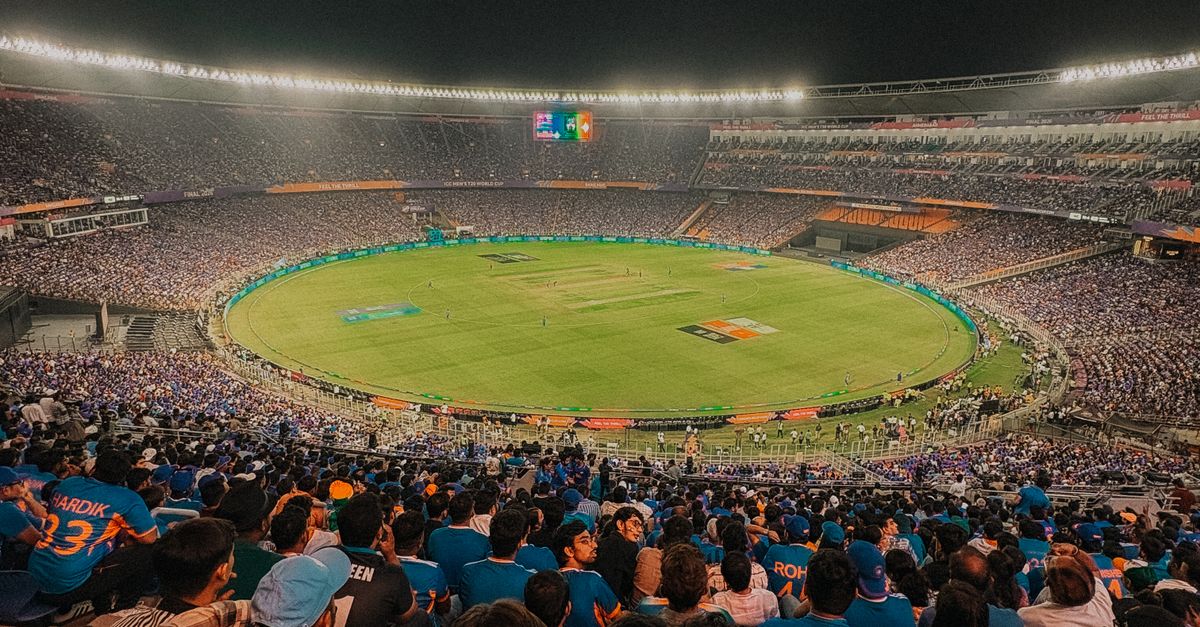
2. Narendra Modi Stadium – 132,000 (reconfigured capacity often cited at 110,000+)
Located in Ahmedabad, India, the Narendra Modi Stadium holds the title of the globe’s biggest cricket arena. Following a comprehensive overhaul finished back in 2020, its capacity and dimensions outgrew the Melbourne Cricket Ground in Australia.
- Primary Use: Cricket
- Features: Four dressing rooms, LED floodlights embedded in the roof
As the venue for the 2023 Cricket World Cup Final, it showcased India’s pivotal position in international cricket.
3. Michigan Stadium – 107,601
Known as “The Big House,” Michigan Stadium in Ann Arbor, United States, is the largest stadium in the Western Hemisphere.
- Primary Use: American college football
- Record Attendance: Over 115,000 for a hockey event in 2014
Opened in 1927, it exemplifies the scale and passion of college athletics in the United States.
4. Beaver Stadium – 106,572
Located in State College, Pennsylvania, Beaver Stadium is home to Penn State University’s football team.
- Primary Use: American college football
- Atmosphere: Known for the “White Out” games with coordinated fan participation
Its steep seating design amplifies crowd noise, making it one of the most intimidating venues in American sports.
5. Ohio Stadium – 102,780
Based in Columbus, Ohio, this historic stadium is home to Ohio State University’s football program.
- Nickname: “The Horseshoe”
- Opened: 1922
It constantly ranks among the highest in average attendance across global sports leagues.
6. Kyle Field – 102,733
Situated in College Station, Texas, Kyle Field acts as the home stadium for Texas A and M University.
- Renovation: Major redevelopment completed in 2015
- Primary Use: American college football
Its modernization preserved immense capacity while adding premium hospitality features.
7. Tiger Stadium – 102,321
Home to Louisiana State University in Baton Rouge, Tiger Stadium is famous for its electrifying night games.
- Nickname: “Death Valley”
- Opened: 1924
The arena’s renown arises from passionate spectator participation and exceptionally loud atmospheres.
8. Neyland Stadium – 101,915
Located in Knoxville, Tennessee, Neyland Stadium serves as the home venue for University of Tennessee football matches.
- Opened: 1921
- Expansion: Multiple expansions over decades
Its riverside setting and checkerboard end zones are iconic in American collegiate sports.
9. Darrell K Royal–Texas Memorial Stadium – 100,119
Located in Austin, Texas, this stadium is home to the University of Texas.
- Opened: 1924
- Recent Upgrade: South end zone expansion
It merges historical tradition with modern amenities, keeping attendance consistently above 100,000.
10. Bryant–Denny Stadium – 100,077
Located in Tuscaloosa, Alabama, Bryant–Denny Stadium is widely recognized as the home of legendary, title-winning football programs.
- Opened: 1929
- Renovations: Continuous expansions through the 21st century
Its architecture balances capacity with enhanced fan comfort and superior seating zones.
Key Observations and Trends
Several important patterns emerge when examining the world’s largest stadiums:
- Dominance of College Football: American college football venues account for most of the top 10 positions, highlighting how enormously popular the sport is regionally.
- Multi-Purpose vs. Single-Sport: While certain mega-stadiums accommodate a wide array of events, others are constructed exclusively for just one discipline, such as cricket.
- Modernization: Numerous massive arenas have experienced overhauls aimed at enhancing safety measures, technological capabilities, and the overall fan experience.
- National Identity: Across various nations, the grandest stadium functions as an emblem of cultural pride alongside political expression.
The Role of Mega-Stadiums in Modern Sports
While newer stadium projects often prioritize luxury boxes and flexible design over sheer size, these giants demonstrate that mass attendance remains a powerful force. Record-breaking crowds generate unmatched atmosphere, economic impact, and global media attention. For universities in the United States, massive stadiums reinforce alumni networks and local economies. In countries like India and North Korea, they project national prestige and unity.
Stadium design evolution often highlights a push-and-pull dynamic between coziness and sheer magnitude. Although high-tech, compact venues deliver superior comfort, the breathtaking atmosphere generated by crowds exceeding 100,000 spectators holds an enduring appeal. Far beyond mere feats of engineering, these ten iconic grounds capture the shared passion of towns, organizations, and countries that still cherish collective sporting moments on the most magnificent scale imaginable.