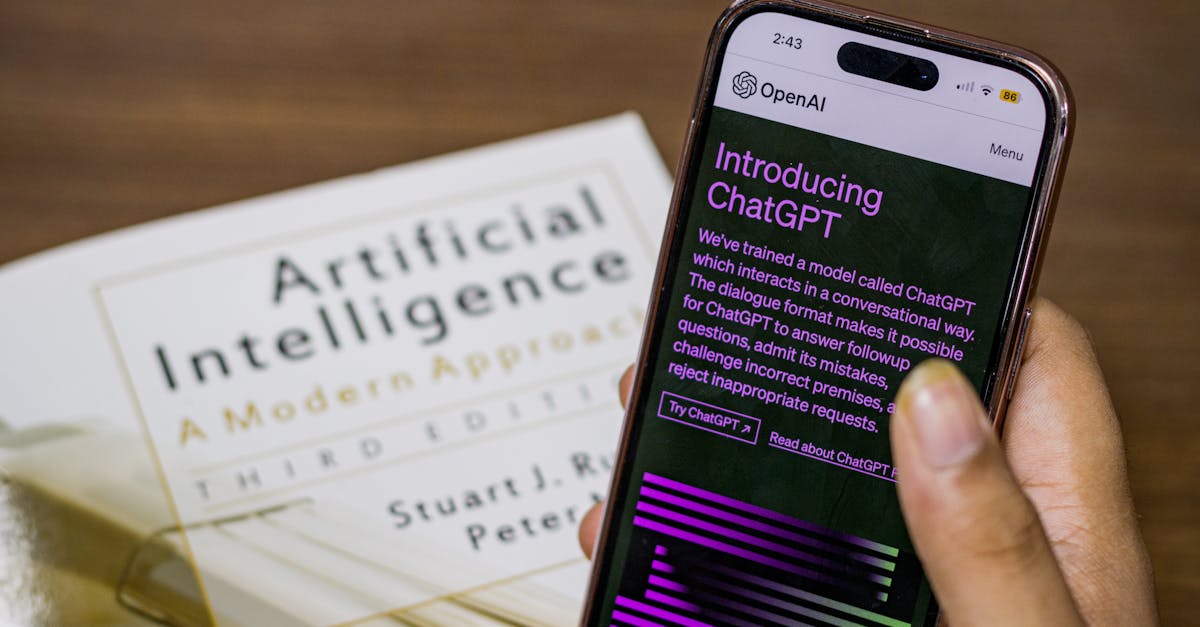
AI agents have moved far beyond experimental projects in research labs, becoming practical and scalable elements in day‑to‑day business workflows, and their swift expansion across sectors is fueled by technological maturity, economic pressures, organizational demands, and a growing cultural readiness for automation, all of which are collectively transforming how work is structured, carried out, and refined.
Maturation of Core AI Technologies
One of the strongest drivers behind AI agent adoption is the significant improvement in underlying technologies. Advances in large language models, machine learning infrastructure, and reasoning systems have transformed AI agents from brittle automation scripts into adaptive digital workers.
Modern AI agents can:
- Interpret unstructured information such as emails, documents, conversations, and voice transcripts
- Carry out multi-step reasoning to accomplish challenging tasks
- Engage autonomously with software tools, databases, and APIs
- Adapt based on feedback and steadily enhance performance
The rise of dependable cloud AI platforms has likewise lowered deployment costs and reduced operational complexity, meaning companies can introduce powerful agents without extensive internal AI knowledge, which speeds up both experimentation and overall adoption.
Pressure to Increase Productivity and Reduce Costs
Global economic uncertainty and competitive markets are pushing organizations to do more with fewer resources. AI agents offer a compelling answer by handling repetitive, time-consuming, and high-volume tasks at a fraction of the cost of human labor.
Typical instances include:
- Customer support agents who handle routine requests at all hours
- Finance agents who balance accounts, identify irregularities, and produce reports
- Sales operations agents who refresh CRM platforms and assess leads automatically
Industry analyses indicate that effectively implemented AI agents can cut operational expenses across specific functions by roughly 20 to 40 percent, while also boosting the speed and uniformity of responses, a mix that makes the return on investment straightforward for executives to defend.
Transition from Automating Tasks to Orchestrating Workflows
Earlier forms of automation handled individual activities like entering information or executing predefined rules, while AI agents now mark a transition toward coordinating full workflows that span multiple platforms and teams.
Instead of simply executing instructions, AI agents can:
- Monitor triggers and events across multiple tools
- Decide what action to take based on context
- Coordinate handoffs between humans and machines
- Escalate exceptions when judgment or approval is required
For example, in procurement, an AI agent can identify a supply shortage, evaluate alternative vendors, request quotes, prepare a recommendation, and route it for approval. This end-to-end capability dramatically increases the value of automation.
Integration with Existing Business Software
Another significant force behind this expansion comes from how smoothly AI agents are being woven into widely adopted enterprise platforms, with CRM systems, ERP tools, help desk software, and collaboration suites now offering more deeply embedded AI features.
This tight integration means:
- Lower disruption to existing workflows
- Faster user adoption due to familiar interfaces
- Improved data access and accuracy
- Reduced implementation risk
When AI agents operate inside the tools employees already use, they feel less like replacements and more like intelligent assistants, which improves organizational acceptance.
Building Confidence by Enhancing Precision and Strengthening Governance
Early doubts about AI’s dependability and potential risks initially hindered adoption, but recent gains in model precision, oversight, and governance structures have largely dispelled those concerns.
Businesses are now implementing AI agents furnished with:
- Human-in-the-loop controls for sensitive decisions
- Audit trails that log actions and reasoning steps
- Role-based permissions and data access limits
- Performance metrics tied to business outcomes
As organizations grow more assured in handling risk, they become increasingly prepared to entrust significant duties to AI agents, which in turn hastens their adoption throughout various departments.
Workforce Evolution and Limitations in Talent Availability
Talent shortages in areas such as data analysis, customer service, and operations are another catalyst. AI agents help fill gaps where hiring is difficult, expensive, or slow.
Rather than replacing employees outright, many companies use AI agents to:
- Offload routine work so humans can focus on higher-value tasks
- Support junior employees with real-time guidance
- Standardize best practices across teams
This cooperative approach meets contemporary workforce expectations while easing potential resistance during adoption.
Rising Competitive Forces and Proven Tracks of Success
As early adopters begin showing clear improvements, the competitive landscape tightens, and momentum builds. When a company uses AI agents to trim sales cycles, boost customer satisfaction, or speed up product development, its rivals feel pressured to keep pace.
Case examples across retail, finance, logistics, and healthcare show AI agents:
- Reducing customer response times from hours to seconds
- Improving forecast accuracy and inventory turnover
- Increasing employee output without increasing headcount
These visible successes turn AI agents from a strategic experiment into a perceived necessity.
A Broader Shift in How Work Is Defined
At a deeper level, the rise of AI agents signals a shift in how organizations perceive work, as tasks are no longer automatically assigned to humans and leaders now assess whether a person, an AI agent, or a combination of both should handle each activity.
This mindset encourages continuous redesign of workflows, where AI agents are treated as flexible, scalable contributors rather than fixed tools. As this perspective spreads, adoption becomes self-reinforcing.
The rapid expansion of AI agents in business workflows is not driven by a single breakthrough or trend. It is the result of converging advances in technology, economics, trust, and organizational design. As companies increasingly view intelligence as something that can be embedded directly into processes, AI agents are becoming a natural extension of how modern work gets done, quietly redefining productivity, roles, and competitive advantage at the same time.