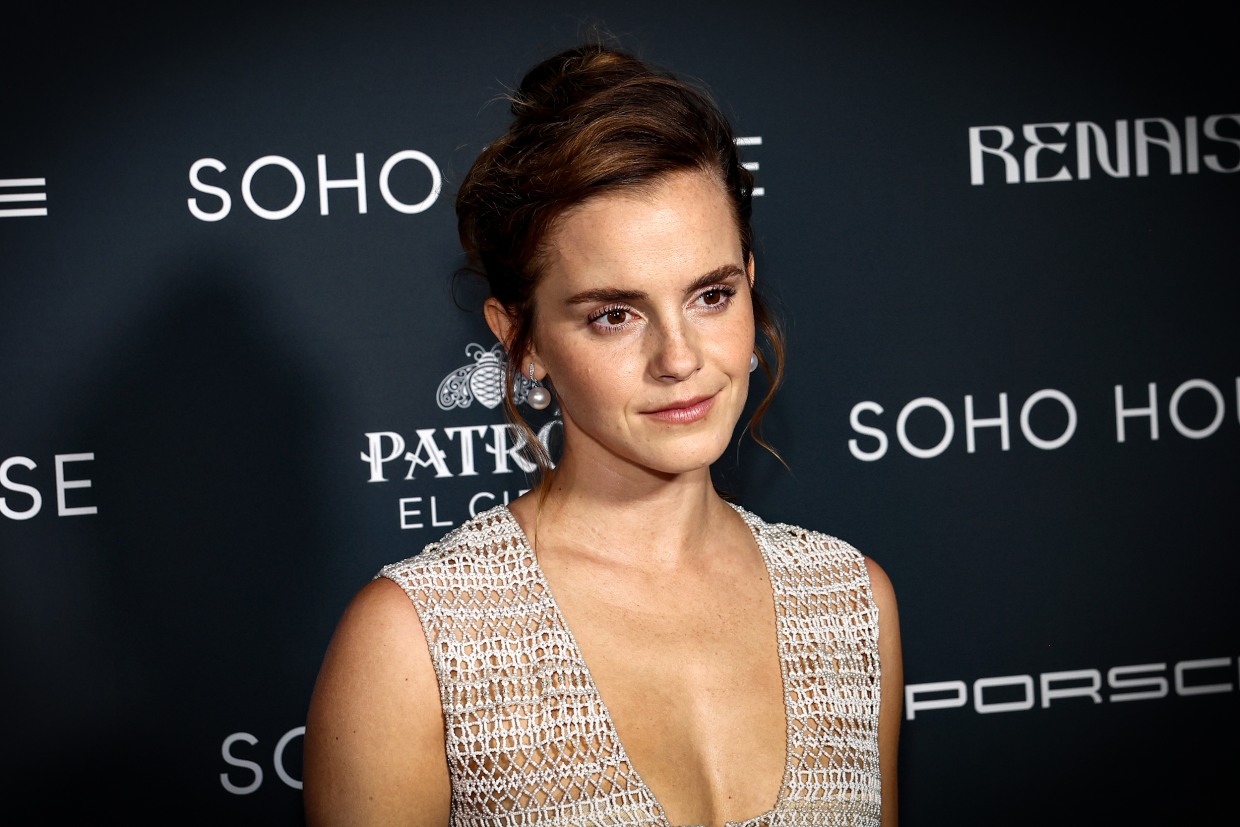
Emma Watson, known universally for her unforgettable portrayal of Hermione Granger in the Harry Potter movies, has been recently barred from driving after breaching several speed limits. This action was taken by officials as a result of accumulating penalty points from repeated speeding offenses.
While many celebrities are often in the public eye for red carpet appearances or philanthropic efforts, this recent development has drawn attention to the lesser-known challenges public figures can face in their personal lives. In this case, Watson’s situation serves as a reminder that even globally admired figures are not exempt from the laws that govern road safety.
The driving ban reportedly stems from a series of offenses rather than a one-time incident. According to reports, Watson exceeded the legal speed limit on several occasions, resulting in enough penalty points to trigger an automatic suspension of her driving privileges. The exact details of each incident remain confidential, but the total number of points exceeded the limit that typically leads to a temporary disqualification under UK law.
Public records show that under the UK’s point-based system for driving offenses, accumulating 12 or more penalty points within a three-year period typically results in a ban. These rules apply uniformly to all drivers, regardless of status or occupation. The suspension length can vary depending on the severity and frequency of the offenses. In Watson’s case, the ban appears to be the result of repeat speeding violations rather than dangerous driving or more severe traffic crimes.
Watson, recognized for her dedication to activism and responsible conduct, has not made any public statements about the prohibition. Nevertheless, individuals associated with her have indicated awareness of the situation, affirming that she will adhere to all legal obligations throughout her suspension. There are no signs that Watson plans to challenge the ruling or dispute the evidence provided in the case.
The media reaction has been relatively measured, with most coverage focusing on the legal aspects of the suspension rather than speculation or judgment. Still, the story has ignited broader conversations about celebrity accountability and the responsibility that comes with being a public figure. Many fans have expressed support for Watson, noting that she is taking responsibility for the situation rather than avoiding the consequences.
Beyond the news stories, this event has ignited conversations surrounding the overall safety of roadways. Speeding continues to be one of the prevalent reasons for vehicular accidents globally, and authorities often highlight the significance of following speed regulations to avert deaths and severe harm. Watson’s situation, although prominent, exemplifies a wider problem impacting drivers of every background.
The wider effects of the situation also concern the impact of famous individuals’ actions on public perception. Known for consistently using her influence to champion causes like learning, fairness, and environmental issues, Watson has been regarded as an exemplar of a mindful public figure. Despite this event not aligning with her usual demeanor, it presents a chance to emphasize the importance of responsibility and accountability, even when errors happen.
Legal analysts have noted that driving bans such as this are not uncommon in the UK, especially when a driver has accumulated multiple infractions over a short period of time. The judicial process is designed to prioritize public safety, and temporary suspensions serve both as a corrective measure and a deterrent to prevent future violations.
Although the specific length of the suspension hasn’t been officially revealed, such bans generally extend to six months or beyond, contingent on the situation. In the meantime, Watson will have to depend on other transportation methods for her daily activities. Additionally, there might be stipulations to participate in a driver awareness course or to reapply for her driving license after the suspension term is over.
Interestingly, Watson has often spoken about the importance of independence and self-sufficiency, values that may make this driving restriction particularly inconvenient. However, given her low-key lifestyle and limited public appearances in recent years, it’s unclear how significantly this will impact her daily routine.
In social networks, responses have varied from astonishment to comprehension. Some individuals have made parallels to similar events involving other celebrities, noting that these occurrences are more frequent than they seem. Others have stressed that the law ought to be enforced uniformly, irrespective of an individual’s status or wealth.
In many ways, Watson’s current predicament serves as a case study in the intersection between public image and private behavior. It reinforces the idea that reputation, while important, does not shield anyone from the consequences of repeated legal infractions. More importantly, it illustrates how individuals—even those who are typically seen as role models—are fallible and subject to the same rules as everyone else.
Whether this incident will have any long-term impact on Watson’s public standing remains to be seen. However, given her track record of transparency and advocacy, it is likely that she will use the experience as a learning moment rather than something to obscure or downplay.
Emma Watson’s license suspension, noteworthy because of her fame, is fundamentally a direct legal issue based on multiple traffic infractions. It highlights the global nature of traffic regulations and emphasizes the importance of all motorists being cautious and accountable on the road. As the attention on this incident diminishes, it might leave a quiet message: responsibility is not just about repercussions—it’s also about the reaction once those repercussions occur.